
Counting the Board in DR Dominoes
Track suits, exposed ends, and remaining tiles so denial plays become automatic.
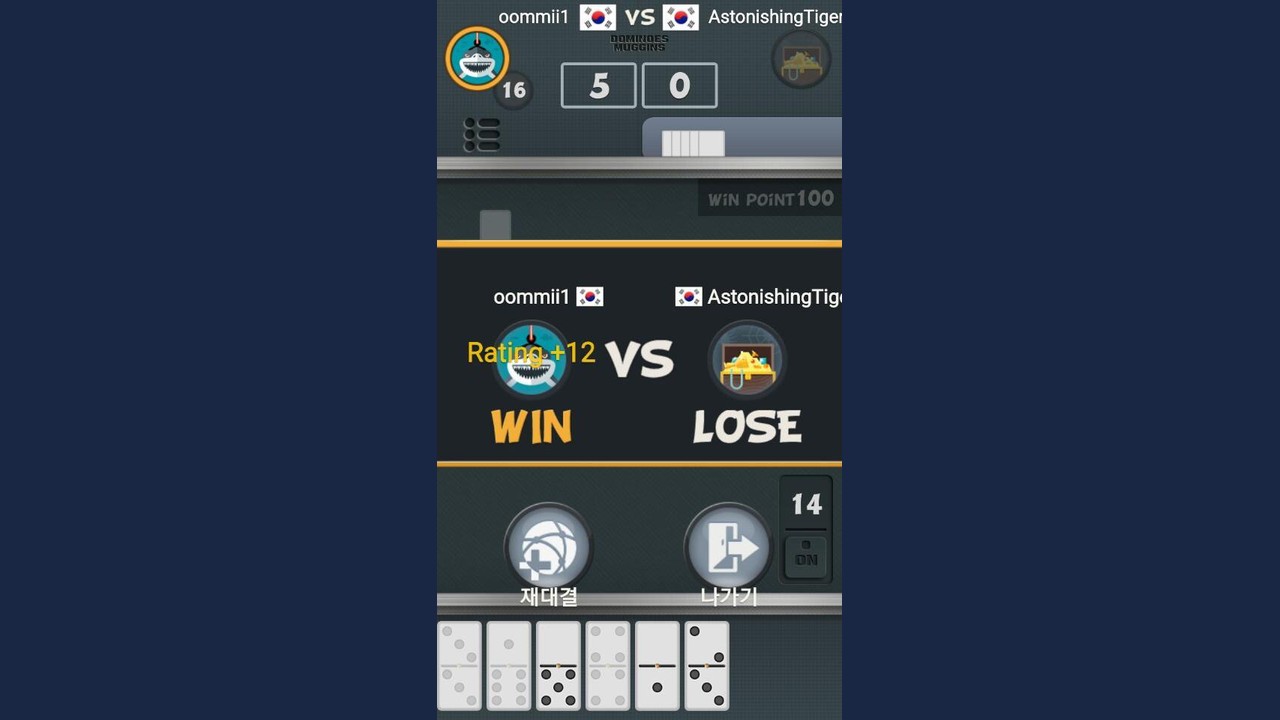
Counting is the skill that turns legal Dominoes into winning Dominoes. In DR Dominoes—the free, ad-supported mobile app from SUD Inc. / Studio UpDown—every hand uses a fixed 28-tile double-six set. Once a tile is played, it is gone for the rest of that hand. Players who remember what left the table control open ends, starve opponents of easy multiples, and stop “lucky” scores before they happen. This guide is the deep dive on suit tracking, exposed-end awareness, and how counting powers denial in Muggins / All Fives. Pair it with the broader Strategy guide and the Score Helper when you want a second pass on arithmetic.
Why counting matters on a double-six set
A double-six set contains every combination from [0|0] through [6|6]—28 unique tiles. There is no second [5|5]. There is no hidden spare [6|4]. That scarcity is the whole game:
- If three 6s are already visible, the remaining 6-suit tiles are limited and precious.
- If
[5|5]is out, spinner and topology options change forever for that hand. - If many blanks are gone, blank-end answers become rare and blank tips become harder to “turn off.”
Casual players only look at their hand. Strong players look at the board + hand + boneyard pressure as one information set. Online queues and offline AI both reward the same habit; only the timer changes. Android builds such as 1.28 (July 2025) and older iOS builds around 1.25 share the same 28-tile math even when UI polish differs.
What to count first (beginner ladder)
Do not try to memorize all 28 faces on day one. Build a ladder:
- Doubles — Track which doubles have been played. Doubles reshape the board and often relate to spinner arms.
- One focus suit — In All Fives, start with 5s. In All Threes, many players start with 3s or 6s. Name the suit before the hand begins.
- Exposed ends every turn — Before you touch a tile, say the open-end sum out loud (offline) or in your head (online).
- Heavy leftovers — Late hand, know whether high tiles like
[6|6]or[6|5]are still out so end-of-hand pip shock hurts less. - Full suit maps — Only after the first four habits feel automatic.
This ladder matches how Strategy introduces counting without freezing under a turn clock. Cross-check which tiles deserve early respect on the Tier List Hub once you can already track doubles and one suit.
Suit counting: the practical method
Each suit number from 0–6 appears on seven tiles in a double-six set (the double plus six mixed tiles). A simple mental ledger looks like:
- Start of hand: “Seven 5s exist.”
- After
[5|2],[5|5], and[6|5]are visible: “Three 5s gone → four 5-bearing tiles remain somewhere (hands + boneyard).” - If an open end shows 5 and you hold no 5, ask whether the opponent is likely loaded or whether the boneyard still hides answers.
You do not need exact seats for every remaining tile. You need density: is this suit fat, thin, or nearly dead? Thin suits make exposed tips harder to answer—and therefore stronger denial tools when you leave an awkward number your opponent cannot hit.
Tracking exposed ends (the board is a scoreboard)
In scored DR Dominoes variants, open ends are not decoration. After every play:
- Identify each live tip (including spinner arms when active).
- Add them.
- Ask whether the sum hits the mode’s trigger (divisible by 5 in All Fives, by 3 in All Threes, by 3 or 5 in Fives and Threes).
- Ask what you can change on your turn—and what you would leave behind.
Miscounting arms is the fastest way to “donate” points. If the UI highlights a spinner, recount carefully. Use Score Helper while studying offline hands so pattern recognition catches up to theory. Then trust your eyes in live play.
Blank tips deserve special attention. A blank adds zero to the sum. Turning a 6-and-4 (10) into a 6-and-0 (6) kills an All Fives score entirely. Turning a 5-and-4 (9) into a 5-and-0 (5) can create one. Counting is not only “what tiles exist”—it is “what sum am I manufacturing.”
Remembering what is left: board, hand, boneyard
Information splits three ways:
- Board — Perfect information. Everything played is public; count it first.
- Your hand — Perfect information to you. Cross off suits you hold when estimating opponent density.
- Boneyard + opponent hand — Hidden pool. As the boneyard shrinks, hidden answers concentrate in fewer places.
When the boneyard is large, “they might draw the answer” is often true. When it is nearly empty, an unanswered stiff end is a real threat. Counting therefore changes tempo decisions: early denial can be soft; late denial must be precise.
How counting fuels All Fives denial
Denial means refusing to leave an easy multiple even when a small selfish score tempts you. Counting makes denial concrete:
- If many 5-suit tiles are gone and you leave a lone open 5 into a board that already sums near a multiple of 5, you may be safe—or you may be feeding the one player who still holds the answer. Know which.
- If
[4|1]and other “make-10” connectors are still live, do not casually leave 6-and-4 shapes. - If you can score 5 now but leave a glaring 15 on three arms, counting the remaining high tiles tells you whether that greed is affordable.
Worked mindset for All Fives:
- List legal plays.
- Compute your immediate score (0, 5, 10, 15…).
- Compute the leave sum and whether it is a multiple of 5.
- Prefer leaves that need scarce tiles to cash.
- When two leaves are equal, keep your own answering power in the suits you just exposed.
That loop is the heart of Muggins / All Fives skill and the reason counting belongs beside raw strategy tips—not after them.
Mode notes: Threes and combined scoring
Counting transfers, but the “danger sums” change:
- All Threes — Multiples of 3 appear more often; soft leaves are rarer; suit thinness still matters, yet you must recompute every sum.
- Fives and Threes — Boards that hit 3 or 5 score; denial is stricter because more totals are “live.”
Always recompute when you switch modes in the app. A “safe 7” in All Fives can be a free gift in All Threes. The tile-counting ledger stays; the scoring filter changes.
Mobile practice plan for DR Dominoes
Use offline sessions first—online timers punish heroic memory attempts:
- Hand A: Track doubles only. After the hand, list which doubles you missed.
- Hand B: Track 5s only (All Fives). Announce remaining 5-density every few plays.
- Hand C: Before each of your turns, name the open-end sum before looking at your hand.
- Hand D: Play denial-first—skip a 5-point grab if it leaves an obvious return 10.
- Hand E: Move online with a lighter ledger (doubles + focus suit + end sum only).
Confirm taps and arm highlights with the Controls habits so mis-taps do not erase good counts. When a hand ends, spend thirty seconds asking which leave gifted a multiple you should have seen.
Common counting failures
- Counting faces in the middle of the chain instead of open ends only
- Forgetting a spinner arm
- Tracking suits in your hand twice (once as “gone from the set” incorrectly)
- Ignoring blanks as scoring tools
- Perfect-memory ego online while the clock expires
Fix failures with smaller ledgers, not longer ones. Accuracy beats completeness.
Putting it together
DR Dominoes gives you endless reps on the same 28-tile universe across online and offline play. Counting the board is how you convert those reps into points: know which suits are thin, know what the open ends sum to, and know which leaves opponents can still answer. Read Strategy for the full decision framework, drill multiples with Score Helper, master triggers in Muggins / All Fives, and refine tile priorities on the Tier List Hub. When exposed ends stop surprising you, denial stops feeling like guesswork—and All Fives starts looking like a solvable puzzle instead of a coin flip.
Frequently Asked Questions
Quick answers to the most common questions.
What should I count first in DR Dominoes?
Start with doubles and one focus suit (often 5s in All Fives), and name the open-end sum before every turn.
How many tiles are in the DR Dominoes set?
A standard double-six set has 28 unique tiles, from [0|0] through [6|6].
How does counting help All Fives denial?
Knowing which suits are thin tells you which awkward ends opponents cannot answer, so you can avoid leaving easy multiples of five.
Should I memorize every remaining tile online?
No. Use a light ledger—doubles, one suit, and end sums—under the timer; practice deeper recall offline.
Where can I practice scoring math while I learn to count?
Use the Score Helper tool alongside offline All Fives hands, then apply the same habits in Strategy and live play.