
DR Dominoes Open-End Score Helper
Sum ends, check multiples of 3 and 5, study worked examples.
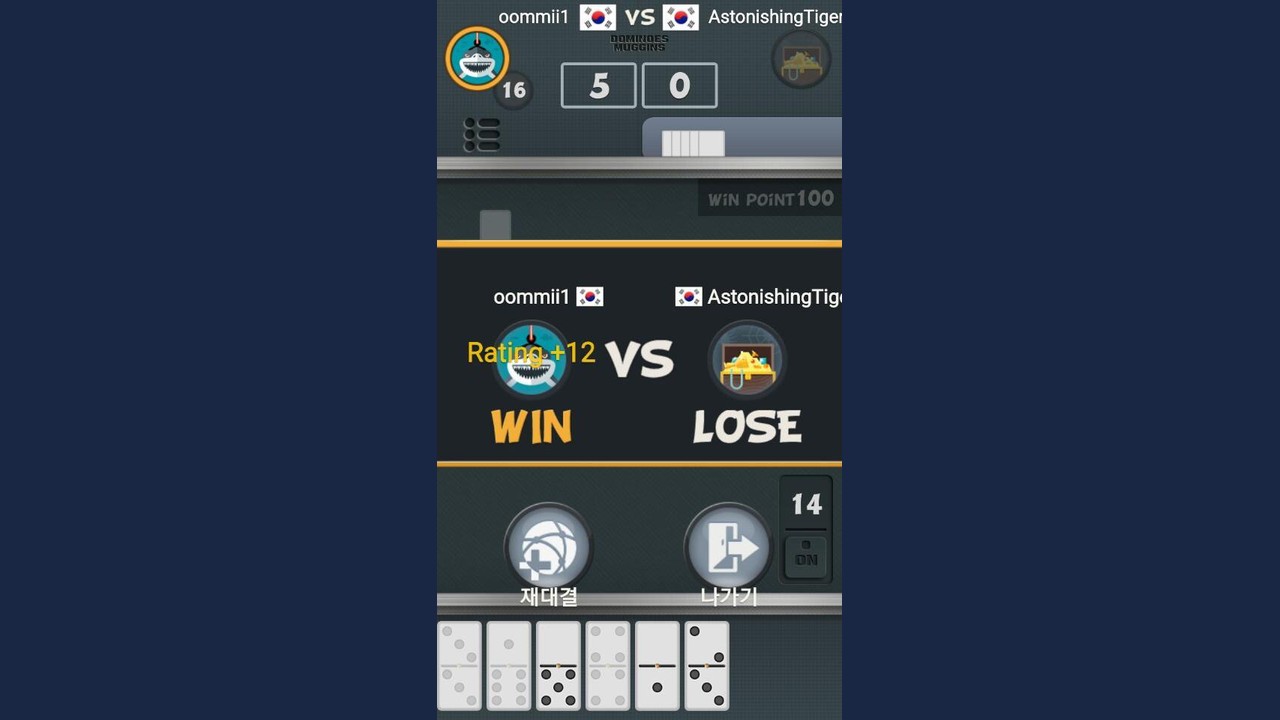
This Score Helper is the practical counting guide for DR Dominoes by SUD Inc. Use it while you learn Muggins / All Fives, All Threes, and Fives and Threes on the free Android and iOS app (ads supported, online and offline). The deck is always a double-six set of 28 tiles. After each play, the question is simple: what do the open ends sum to, and is that sum a paying multiple?
Return to the Tools Hub for orientation, and pair this page with Muggins / All Fives, strategy, and tile priority.
Step-by-step: how to sum open ends
- Find every open end on the layout. In branched positions you may have two, three, or four ends.
- Read the pip value showing on each open end. A blank counts as 0.
- If an exposed double is an open end, count both halves (for example, an open [5-5] contributes 10 while both sides remain relevant to the count).
- Add the values for a single total.
- Check the variant table below.
- If it pays, that play scores that total (not “one point per multiple”—you score the sum itself in the usual All Fives presentation used throughout this wiki).
Do this every turn in offline practice until it is automatic online.
Multiples of 5 table (All Fives / Muggins)
| Open-end sum | All Fives score? | Notes |
|---|---|---|
| 0 | No | All blanks / zeros |
| 1–4 | No | Near misses—look for a pip that completes 5 |
| 5 | Yes — 5 | Common early score |
| 6–9 | No | 8→10 and 9→10 are frequent upgrades |
| 10 | Yes — 10 | Very common target |
| 11–14 | No | 14→15 is a classic swing |
| 15 | Yes — 15 | Often involves an exposed double |
| 16–19 | No | Hunt the +1 to +4 pip |
| 20 | Yes — 20 | Huge turn; usually double-heavy |
| 25 / 30… | Yes | Rare but decisive |
Multiples of 3 table (All Threes)
| Open-end sum | All Threes score? |
|---|---|
| 0 | No useful score in normal play |
| 1, 2 | No |
| 3 | Yes — 3 |
| 4, 5 | No |
| 6 | Yes — 6 |
| 7, 8 | No |
| 9 | Yes — 9 |
| 10, 11 | No |
| 12 | Yes — 12 |
| 13, 14 | No |
| 15 | Yes — 15 |
| 18 / 21… | Yes |
Practical tip: in All Threes, sums like 10 or 20 that feel good from All Fives muscle memory may not score. Always re-check.
Fives and Threes quick check
Ask two questions after every play:
- Is the sum divisible by 5?
- If not, is it divisible by 3?
If either answer is yes, the play scores that sum. This variant rewards flexible tiles and punishes players who only scan for fives.
Worked examples (All Fives)
Example A — Simple two-end score
Open ends after your play: 4 and 1.
Sum = 5 → score 5.
Example B — Blank kills a score
Before your play, ends were 5 and 5 (sum 10). You play a tile that replaces one 5 with a 0.
New ends: 0 and 5. Sum = 5 → you still score 5, but you just turned a 10-shaped board into a smaller cash-in (or prevented an opponent from keeping a hotter shape). Always compute the new ends, not the old ones.
Example C — Exposed double
One open end is an exposed [6-6] (counts as 12) and the other open end shows 3.
Sum = 15 → score 15.
Example D — Near miss to conversion
Ends show 6 and 3 (sum 9). You can play onto the 3 with [3-1], leaving 6 and 1 (sum 7)—still no score—or onto the 6 with a tile that leaves a 4, creating 4 + 3 = 7. Neither pays. If you instead leave 5 + 5, you cash 10. The helper mindset is: which legal tile changes the sum into a multiple of five?
Example E — Four-end awareness
When branches create three or four open ends, list them in a column:
- End A: 2
- End B: 3
- End C: 5
- End D: 0
Sum = 10 → score 10. Missing the blank end is a common way players mis-add to 10 when the true total was 10 all along—or think they scored when they forgot an end.
Conversion helper (add this pip)
| Current sum | Pip needed for next All Fives hit | Lands on |
|---|---|---|
| 1 | +4 | 5 |
| 2 | +3 | 5 |
| 3 | +2 | 5 |
| 4 | +1 | 5 |
| 6 | +4 | 10 |
| 7 | +3 | 10 |
| 8 | +2 | 10 |
| 9 | +1 | 10 |
| 11 | +4 | 15 |
| 12 | +3 | 15 |
| 13 | +2 | 15 |
| 14 | +1 | 15 |
For All Threes, rebuild the same idea with distance to the next multiple of three (for example, sum 7 needs +2 to reach 9).
Practice routine with this page
- Pick Example C and recreate the shape offline.
- Change one end by a single pip and recompute.
- Repeat in All Threes without looking at the fives table.
- Play a Fives and Threes hand scanning both tables.
- Enter a short online session with the sole goal of correct sums.
Use the Modes Hub, offline practice, and online multiplayer to schedule those reps.
Strategy links after the math clicks
Once counting is stable:
- Rank openings on Opening Moves
- Clean dumps via Tile Priority
- Study longer patterns in strategy
- Confirm rules nuance in Muggins / All Fives
Mistakes this helper prevents
- Forgetting a branched end
- Counting a double as a single pip while it is still fully exposed
- Treating blanks as “nothing to think about”
- Applying All Fives instincts in All Threes
- Celebrating a sum of 10 in Fives and Threes without noticing 9 was already available earlier—or missing that 9 also pays in that variant
DR Dominoes rewards players who treat arithmetic as part of tactics. This Score Helper gives you the tables and examples; the free SUD Inc. client on Android and iOS gives you endless offline boards to verify them. Sum the ends, check the multiple, then play the bone that deserves the points.
Frequently Asked Questions
Quick answers to the most common questions.
How do I know if I scored in All Fives?
After your tile is played, add every open end (counting both halves of an exposed double when applicable). If the total is a multiple of five, you score that total.
Do blanks count in the sum?
Yes. Blanks contribute zero, which can create or destroy a multiple. Never ignore a blank end.
How does All Threes differ in this helper?
Use the multiples of three table instead of five. A sum like 10 that scores in All Fives usually does not score in All Threes.
What about Fives and Threes?
Check for multiples of five or three. If either applies, the play scores that open-end sum.
Should I use this helper during online matches?
Study it offline until the patterns are memorized. In online play, rely on the trained habit of summing ends every turn.