
DR Dominoes Scoring and Spinners Deep Dive
Count arms, doubles, and leftovers without second-guessing the math.
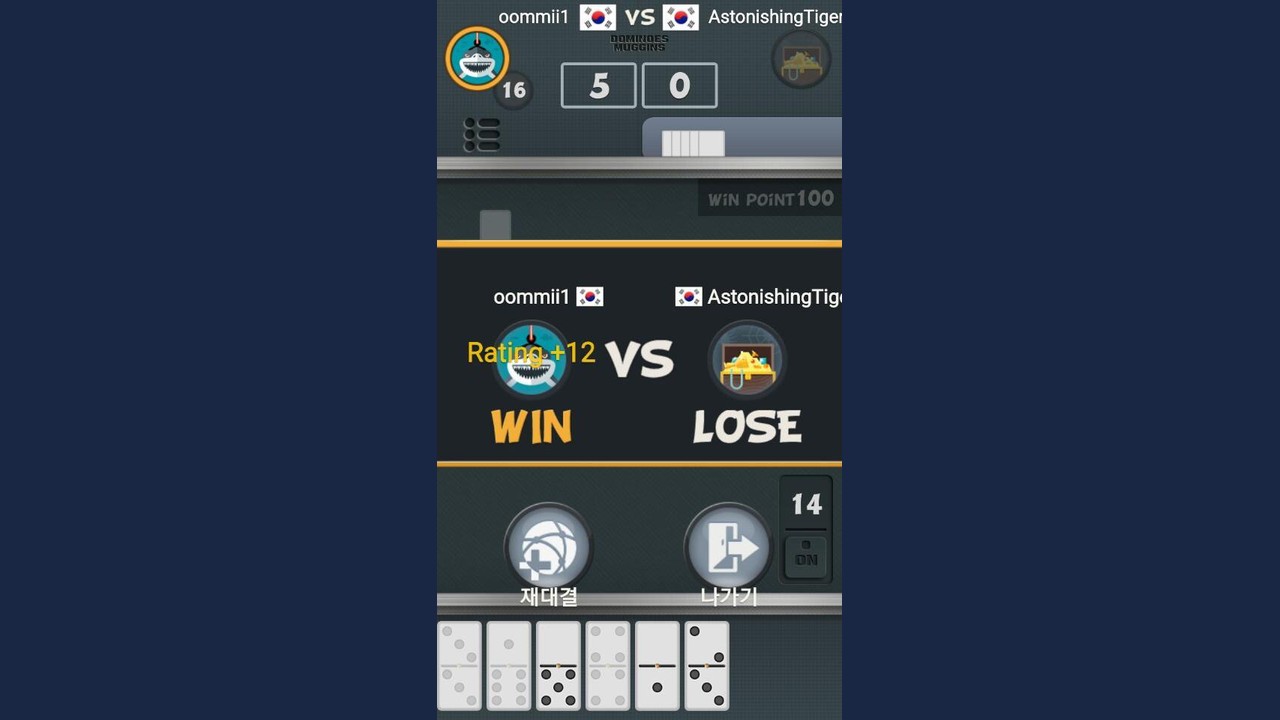
This page is the math companion for DR Dominoes point variants. It does not replace mode rules—use Muggins / All Fives, All Threes, and Fives and Threes for triggers—but it explains how open ends, spinner arms, doubles, and end-of-hand pips are counted so your mental total matches the board. If matching ends still feel shaky, read How to Play Dominoes first.
What “open ends” means precisely
Only numbers that a player could legally match on the next turn count as open ends. Faces buried in the middle of the chain do not add to the scoring sum. On a simple line with two tips, you add those two tip values. On a branched layout, you add each unfinished arm’s tip.
Quick checklist after every play:
- Find the spinner (if any) and every branch.
- Touch each tip visually—including blanks.
- Write the numbers in a tiny list (6, 4, 5).
- Sum once.
- Apply the mode rule (÷5, ÷3, or ÷3-or-5).
Most disputes are failed step 2, not failed arithmetic.
Spinners: why arms multiply mistakes
In many Muggins-style tables, the first double played becomes a spinner. Play may continue off multiple sides of that double, creating three or four live arms instead of two tips. Each open arm contributes its exposed number to the sum.
Example pattern:
- Spinner
[5|5]with arms ending in 2, 3, and 6 → sum 2+3+6 = 11 (scores in neither pure Fives nor pure Threes; scores in neither side of Fives and Threes). - Same spinner with arms 5, 5, and 5 → sum 15 (scores in All Fives, All Threes, and Fives and Threes).
When an arm is capped by a tile that leaves a new tip, replace only that arm’s contribution. Do not keep adding old tips that are no longer open.
On mobile, arms fold visually. Zoom and pan using habits from Controls before you lock a score in your head—especially online under a turn timer (Online Multiplayer).
How doubles usually count as open ends
Teaching diagrams sometimes confuse players by showing both halves of a double. For open-end scoring totals, a double that sits as an open tip is generally counted as one number—the face value—not the sum of both halves. A unique open [4|4] tip contributes 4 to the open-end sum, not 8. (End-of-hand pip counting in your hand is different: a held [4|4] is worth 8 pips when totaling remaining spots.)
Keep the two ideas separate:
- Open-end scoring sum → exposed tips/arms on the table layout
- Hand pip total → sum of all spots still in a player’s hand at settlement
Mixing those is how someone “scores 8” from an open double incorrectly mid-hand.
Mode triggers (reminder)
- All Fives / Muggins: score if open-end sum divisible by 5.
- All Threes: score if divisible by 3.
- Fives and Threes: score if divisible by 3 or 5 (pay the sum once even if both apply).
Examples with the same arms 6 + 4:
- Sum 10 → scores in All Fives and in Fives and Threes; not in All Threes.
Examples with arms 6 + 3:
- Sum 9 → scores in All Threes and Fives and Threes; not in All Fives.
End-of-hand points
Hands end by going out or by block. Point variants then convert remaining tiles into scores. Exact formulas can vary by house rules; DR Dominoes will show a settlement line—reconcile it with these common patterns:
- Count each remaining tile’s pips (both ends; doubles count both halves, so
[6|6]is 12). - Often the player who goes out scores the opponents’ remaining pip totals (sometimes rounded or adjusted to the mode’s multiple—some Muggins tables round to the nearest 5).
- In a blocked game, the player with the lowest remaining pips may score the difference (or another listed method).
Because rounding rules differ across kitchen tables, treat the in-app results screen as authority for DR Dominoes, and use this page to understand why a pip pile became a chunk of points. If you practice offline, screenshot or note settlements until the pattern is familiar.
Worked mid-hand counts
Line board. Tips 6 and 2. Sum = 8. All Fives: 0. All Threes: 0. Fives and Threes: 0.
Line board after play. You play onto the 2 with [2|4]. New tips 6 and 4. Sum = 10. All Fives: 10. All Threes: 0. Fives and Threes: 10.
Spinner board. Arms 5, blank (0), and 5. Sum = 10. Scores for Fives-based modes.
Spinner board. Arms 2, 2, and 2. Sum = 6. Scores for Threes-based modes.
Denial recount. Before you play, compute the sum you will leave for the opponent if they can answer. Good scoring for you that leaves an obvious 15 for them may be a net loss—see Strategy.
Practical counting habits
- Add left-to-right the same way every time.
- Count blanks as zero, never as “skip.”
- After doubles, rewalk every arm from the spinner outward.
- If the app flashes a score you did not expect, rebuild the arm list before moving on.
- In Fives and Threes, check both moduli; do not stop after failing the first test.
How this ties to DR Dominoes as a product
SUD Inc. / Studio UpDown presents these scored variants in a free Android and iOS app with ads (com.ansangha.drdominoes). Android updates have been more current (1.28, Jul 2025 noted), while iOS may lag. Scoring UI chrome can differ by version, but the Dominoes math does not: open ends, arms, and pips. Start from Getting Started if you still need the day-one path, and compare ranked tile priorities on the Tier List Hub only after your counting is trustworthy.
Drill: five boards in five minutes
Create or recall five layouts and force yourself to answer: arm list, sum, scores in each of the three modes, and pip value of a sample leftover hand including one double. Do not advance to online optimization until those answers are boring. Accurate scoring is the difference between improving and reinforcing superstition.
When your counts match the board every time, return to the variant pages for examples and to Strategy for decisions that create better sums—not just correct ones.
Frequently Asked Questions
Quick answers to the most common questions.
Does an open double count as 8 or 4 for mid-hand scoring?
As an open tip, count the face value once (e.g. open [4|4] adds 4). In-hand pip totals at settlement still count both halves (8).
What is a spinner arm?
A branch off a spinner double. Each unfinished arm’s exposed tip adds to the open-end scoring sum.
Why did 15 not give me 30 in Fives and Threes?
Because 15 qualifies under both 3 and 5 but pays the sum once—15 points, not 30.
How are end-of-hand points decided?
Remaining pips are totaled after go-out or block; the app’s settlement line is authoritative. Some house rules also round to mode multiples.
Which guide do I read for All Fives examples?
Use Muggins / All Fives for mode examples; keep this page open for arm and pip counting details.